Jacket 2 has published a new review of Hoa Nguyen’s As Long as Trees Last here.
Author: Dale Smith
I am a writer and teacher who lives in Austin Texas.
Works and Days of the Fénéon Collective now available in pdf from Delete Press.
Turn on Slow Poetry: Cavell on Emerson
My thinking about writing for some time has received a great boost by reading Stanley Cavell’s Emerson’s Transcendental Etudes (Stanford, 2003). In it he accesses through Emerson what I think of as a realm of slow poetry, particularly by way of individual association “one person at a time”:
Emerson’s house of words is essentially less than a city, and while its word is not that of hope, its majesty is not to despair, but to let the “grandeur of justice shine” in it, and “affection cheer” it. Kant had asked, What can I hope for? Emerson in effect answers, for nothing. You do not know what there is hope for. “Patience—patience [suffering, reception]”; “abide on your instincts”—presumably because that is the way of thinking. For him who abides this way, “the huge world will come round to him”—presumably in the form in which it comes to Emerson, one person at a time, a world whose turning constitutes the world’s coming around—the form in which you come to your (further) self (167).
SPD
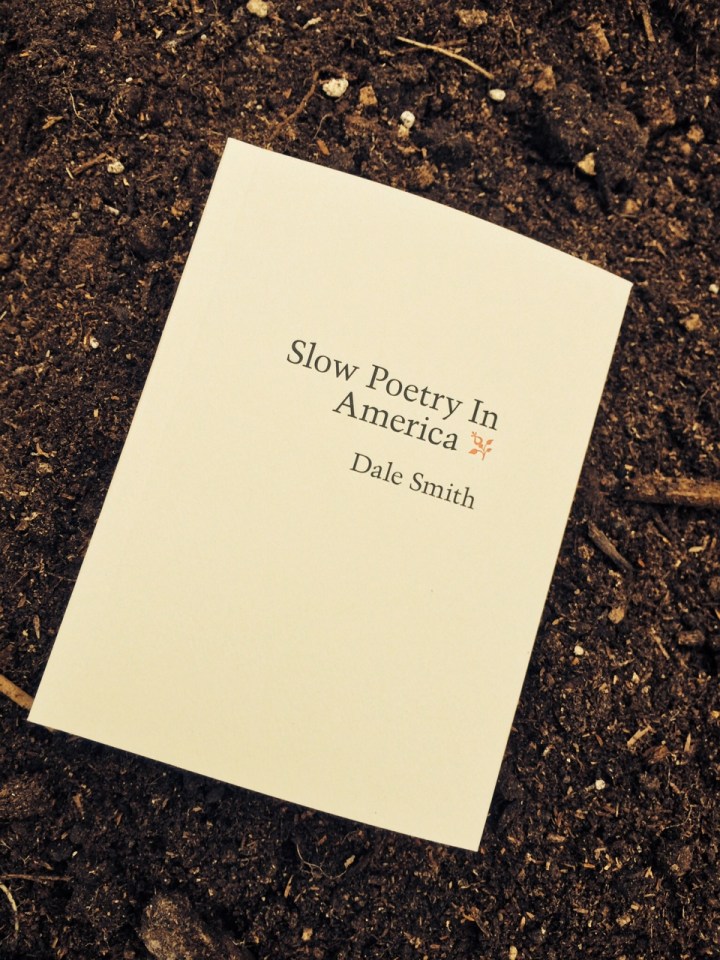
Slow Poetry in America is now available through Small Press Distribution.
Out Now
Attitude is Slow Poetry
“…a recurrent struggle to maintain an attitude” (Wittgenstein).
*
There is no one way of thinking, since reference (hence value) is as scattered and dissimilar as people themselves. If poetry can be seen to be the result of certain attitudes, certain specific ways of thinking about the world (and only ultimately about the ways in which poetry can be made), then the basic hypothesis of Slow Poetry is understood.
The subjectivity expressed by the “lyric I” understands poetry first as a kind of form, but seldom as an attitude, since the attitude, or world-view, the “lyric I” represents is responsible to an investment in a particular kind of order. And in many cases, this attitude, or world-view, is not consistent with the making of poetry.
*
I is not a subject. I’s attitude.
*
What’s your name?
i, I answered.
That’s a simple name
Is it an initial?
No it is a single.
“suppose sorrow…
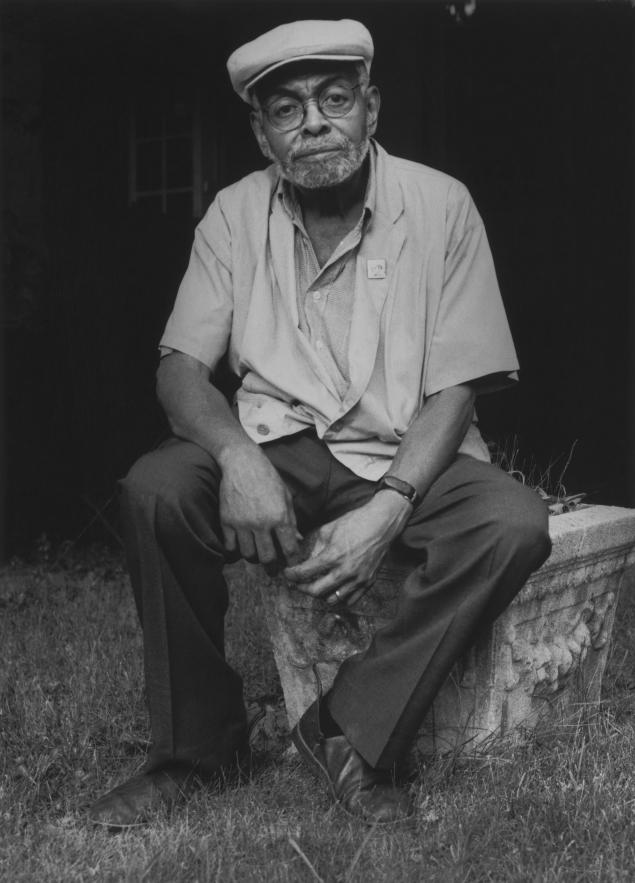
“suppose sorrow was a time machine”
Amiri Baraka
October 7, 1934 – January 9, 2014
If I listened to the words issuing from my own mouth, then I could say that someone else was speaking out of it.
Wittgenstein

 DALE MARTIN SMITH